I'm always so pleased when I find a way round some exasperating computer problem that I thought I'd share my moments of triumph ...

Saturday, 30 March 2013

Use your Google calendars on your iPhone


If you use Google's calendar you can synch it with your iPhone's built in calendar (which I must say, is a really nice app). You don't have to use Apple's Cloud, or be restricted to iCal on your Mac.

Google has now provided instructions (spoken, even!) for synching your mobile device calendar with Google's, including iPhone. Better late than never.

Here's how:

1: Set up a Google Calendar account on the iPhone

On your iPhone go to:
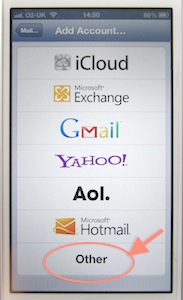
Settings> Mail, contacts, calendars > Add account > Other > Add CalDAV account
Then:
  • Server is google.com
  • User name is your Google user name (the email address or whatever that you sign in with), 
  • Password is your Google account password,
  • Description is optional. 
Then cllick Advanced settings and make sure SSL is On.

2: In Google, select the calendars you want on your iPhone

I noticed that not all my different calendars were showing. So:
  • Open a mobile browser and go to this url: https://www.google.com/calendar/syncselect
  • Sign into Google with your user email and password. 
  • On the list of your calendars, check those that you want on your iPhone.
Done! it works!

3: Set your preferred Google calendar to be the default

Entries added on my iPhone weren't getting through initially - because it had decided to use the inbuilt Birthdays as the default calendar.
  • Go back to Settings > Mail, contacts, calendars > and scroll down to Calendars > Default calendar.
  • You'll see a list of those available. Delete any that aren't on your Google calendar and select the one you want to be your default.
You can also delete all the extraneous additional 'calendars' (that the iPhone is born with, I suppose).

4: Select on your iPhone the calendars you want to see

  • Return to the home screen and go to Calendar.
  • In any view, go to Calendars (top left of the screen) and from the list select those you want it to show on your iPhone. Then you can click the Refresh button bottom left.
After about half a day searching Google for answers, my iPhone does now perfectly synch iPhone < > Google calendar < > desktop Mac, both ways throughout. Solved!
(On my MacBook / iMac I like to use Mozilla's Sunbird with the Provider add-on, but that's a different story.)

PS: Searches on Google didn't throw up the iPhone manual as a possible source of answers, but it is fairly helpful although not as detailed. I'm not sure it gives the complete answer.


Tuesday, 12 March 2013

Read Kindle books on Kobo or other reader - how to

Yes you can! Now, concentrate.

1. To remove the DRM code (digital rights management)

Apprentice Alf is the leader in this dark art. In his blog, http://apprenticealf.wordpress.com/ you will find useful discussion and links to the up to date conversion tools.

Download the current tools (pay attention to Apprentic Alf's instructions) and unzip the folder. Don't be daunted by the technical chat, just follow the instructions in the ReadMe files.

To free up Kindle e-books (this is on a Mac, there are similar facilites for a Windows pc) - move the zip file DeDRM_5.0.app.zip onto your desktop (or other convenient folder), click it to unpack to a curly icon DeDRM.app.

Your Kindle book files are in My Kindle Content. They don't have helpful titles, but sort them by date, and it's the .azw file, the largest size, that is the book. Drag this onto the curly icon and it will save a freed up copy of the book for you. You should be able to upload that to your reader, via the free Calibre software or even via your normal reader software.
  • A Kindle book I recently bought didn't turn up in My Kindle Content until I'd opened the Kindle desktop reader and added it to my library there. Voila, there was the .azw file.
  • If you are using Calibre with the DeDRM plugins installed, as below, you don't need to do the above separately.

2. To manage your ebooks library and reader content using Calibre

Calibre is a generic ebooks management application, very handy, search to download it for free (be fair, do donate). Using Calibre you can:
  • manage the books on your ereader
  • assemble all your ebooks from whatever source in one folder
  • read them on your desktop 
  • automatically convert books from different formats for your own ereader, whatever that is
and much much more besides which I haven't tried out.

3. To set up Calibre to automatically convert books for upload

  1. Downloaded and instal Calibre
  2. Install the DeDRM plugins:
    - Go to Calibre's Preferences (under Calibre in the top menu)
    - Under Advanced, click Plugins
    - Select Load plugin from file
    - Navigate to the downloaded folder of Tools
    - In the sub folder inside that, Calibre plugins, click and load each of the zip files in turn
    - Click the green Apply tick, top left
  3. Repeat until all are installed. Restart Calibre.
Then, Calibre's menus are self explanatory. You can just add the book file to the Calibre library and upload it to your device - select Autoconvert and it will do the conversion as part of the process, as long as the DeDRM plugins are installed.

Saturday, 23 February 2013

Your Google calendar on your desktop - Sunbird

I much prefer Sunbird to iCal for synching with a Google calendar (or any other online calendar, I guess). For instance you can show not just the current month but the current 5 or 6 weeks in one view. - October 2013, I just had to check this following an upgrade to OS 10.8, Mountain Lion - it all works.

Sunbird is free, developed by Mozilla of Firefox browser and Thunderbird email client. (Similarly I prefer T-bird to Mail). They are trying to make people give up Sunbird, which is a stand alone calendar, and take to Lightening which works as part of Thunderbird. Like many others I want my calendar separate, thanks.

You can still get Sunbird and it works on Mac OS 10.6, 10.7 and 10.8 (that's Snow Leopard, Lion and Mountain Lion). Sunbird v. 1.0b1 is here (for Windows, Linux and Mac).

Once you've downloaded and installed it, you need an extra bit of software - Provider. This enables you to link to your Google calendars. Download and save it from here - Provider 0.6b1 (scroll down until you see this version, others only work with Lightening).

Then, back to Sunbird. Top menu, Tools > Extensions > Install. Then navigate to where you saved Provider and select it, confirm Install if asked.

Okay, now you're set up to communicate with Google calendar, but where are your events etc? You have to add a link to each of your calendars, one at a time.

Open a browser and go to your Google Calendar. Highlight a calendar and click the little down arrow to the right. Select Settings.

Scroll down the Settings screen and you'll see Calendar address. Click iCal and highlight and copy the code you see.

Now back to Sunbird. File > Subscribe to remote calendar > Create a new calendar - On the Network >  Google calendar - and paste in the code you copied from Google. You'll be asked for your Google account name and password. Choose a name and a colour for the calendar and you're done.

Repeat for each of your Google calendars and any public ones you want to add.

One last thing, Sunbird > Preferenced > Advanced > Encryption, make sure Use SSL 3.0 is ticked and use TLS 1.0 is not ticked.

A bit of a faff, but worth it I find.

iPhone calendar - even better, Fantastical

While we're on calendars, I thought the iCal one was fine on the iPhone until I found Fantastical (£1.99 I think). It's an app that simply provides a new calendar interface. Just install Fantastical on your iPhone and it will ask you to give it permission to use your calendars (provided you have linked to them as in the previous posts). Then they, fantastically, appear.


Dates will display across the top of the screen - pull down the tab for a monthly view. Pull down again to return to the list. Scroll around very quickly and nicely - all sorts of other refinements. Nice.

Saturday, 16 February 2013

iPhone calendar - show public holidays

The previous post dealt with synching iPhone's calendar with Google calendar, but following that process you don't get public holidays showing.

Here's how to do that.

First do Stage 1 on your iPhone:
Settings> Mail, contacts, calendars > Add account > Other > only this time, select Add subscribed calendar.

Then, the server is whatever public holiday calendar you wish. I used Apple's purely because it's easy to find the server address:
ical.mac.com/ical/UK32Holidays.ics

For US public holidays, it's
ical.mac.com/ical/US32Holidays.ics

Or if you're using Google calendars anyway, here's Google's:
https://www.google.com/calendar/ical/uk__en%40holiday.calendar.google.com/public/basic.ics


Thursday, 17 January 2013

Speed up your iPhone

My iPhone 3GS slowed to a crawl for internet operations like web browsing or using apps, but like magic, it's now ... well ... bearable again. So simple.

Maybe I'm slow on the uptake, but I didn't realise that you have to close down an app. when you've done with it - not just click the Home button.

Try this: click the Home button twice (the round sunken button at the bottom). You'll see all the open apps. in the bar at the bottom of the screen. Scroll right to see the whole line-up. Yes, probably every app. you've ever used. No wonder the thing has slowed to a crawl, it only has a tiny little brain in there.

To close an app.(s), hold your fingertip on one for a bit and you get the red minus signs on them: click to close.

Or, without the red minus signs, just click on an app. to go to it and resume where you left off.

Handy, eh?

Saturday, 29 December 2012

BT broadband - sending non-BT account email - solved

Whew! what a struggle!

In spite of bad past experiences with BT broadband, I was tempted by their current offer.

Their website support for email settings etc is the absolute pits. It is unbelievably poor. I spent a whole day and more struggling to set up my non-BT outgoing email. Judging from their discussion forums this is quite common, http://bit.ly/Tpv9uj.

Another user describes the problem:

I switched to BT Infinity earlier this month, but want to retain my existing non-BT email account. I'm continuing to receive emails, but cannot configure the outgoing server. I've searched the forum postings ... with no success. 
I'm using Mozilla Thunderbird.
I myself found that: 
BT's standard help page is absolutely useless. It only gives partial information and quickly dumps you into BT's misnamed 'technical help'; beware, it costs you £15 a call and the help don't even know what you are asking them.
Two steps into the help sequence meant to tell you how to set up your non-bt email account, BT provides the curt message, "Sorry, but we can't help with email accounts that we don't provide." Love it.
A forum expert explained that BT uses Yahoo! email to provide its email service. To use a non-BT email address for sending, you have to register the extra email address with Yahoo!. Yahoo! says this reduces spam etc.  http://www.btyahoo.com/verify  
It is complicated but just follow the instructions.

Once you've registered your non-BT email address(es) with Yahoo!, you need the settings for the outgoing email server. Here are the settings I used, in Thunderbird, but most email clients need the same stuff:

Outgoing server (SMTP): I called it "bt outgoing"
Server Name:  mail.btinternet.com
Port: 465
Connection security: SSL/TLS
Authentication method: Normal password
User name: just your user name, for instance, fluffypaws

[the first time you send you will be asked to input your bt internet account password, which in my case is the same as my bt internet Yahoo! password]

Whoo! finally I can send email, with my normal non-bt email address.